Intro
Mainstream usage of generative AI models (GenAI) is everywhere. In a 2024 survey conducted on 459 Canadian university students, 59% of them were using GenAI models during their workflow, an increase of 7% from the previous year. But as these AI tools become increasingly popular and smarter, it’s clear that we need a better understanding of how to ethically use them.
AI models can now slowly get close to or even match human scores on assignments. According to Lucas Wright, a professor at UBC and our guest speaker for this week, the GPT-3.5 version of ChatGPT scored within the 20th percentile of a standardized exam whereas GPT-4 scored 67%. These tools have created newer ways to approach the same problems- some people that can be used as a way of leading yourself to the right answer, whereas others use it as a shortcut to get it for them, costing them marks in the university on top of their personal integrity.
In 2022, an AI generated image that took over a week to prompt won an art contest. Lucas Wright, explains in his guest lecture that the results generated by AI are usually dependent on how complex their prompts are in his words “garbage in, garbage out.” For example, if you ask an AI model to generate an image with a relatively generic prompt, such as “skeleton in a tuxedo drinking espresso at the Champs-Elysées in Paris,” you’ll be left with a generic interpretation of your prompt. However, if you elaborate on it and reiterate on the same points multiple times your image of the skeleton will become increasingly more complex.
“Typecasting” GenAI for tutoring
GenAI models are atrocious at making original works when asked to, but they can excel aiding humans in creating newer works themselves. Wright states that the best way to prompt AI is to imagine them like they’re actors. I interpret this as to ‘typecast’ them according to the field of expertise you want them to have. In the same way that an actor like The Rock is typecasted for a character that fits his ‘tough guy’ persona regularly shown in his films, you can typecast AI models to specialize in a specific field, whether that’s linguistics, mechanical engineering, digital art, and so on. This can make them an incredibly powerful set of tutors with the right prompting.
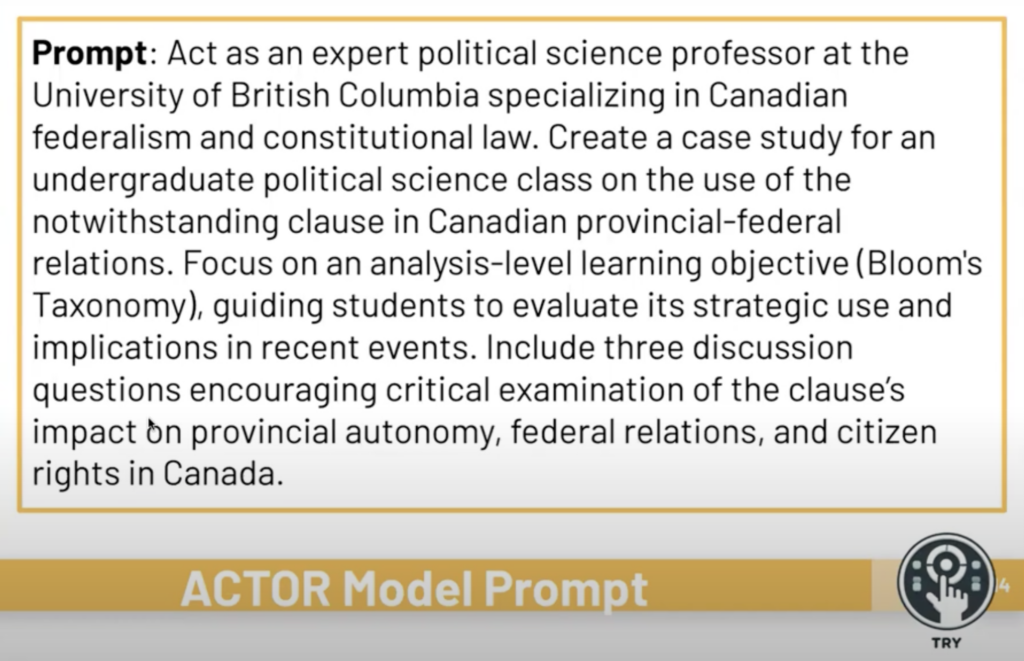
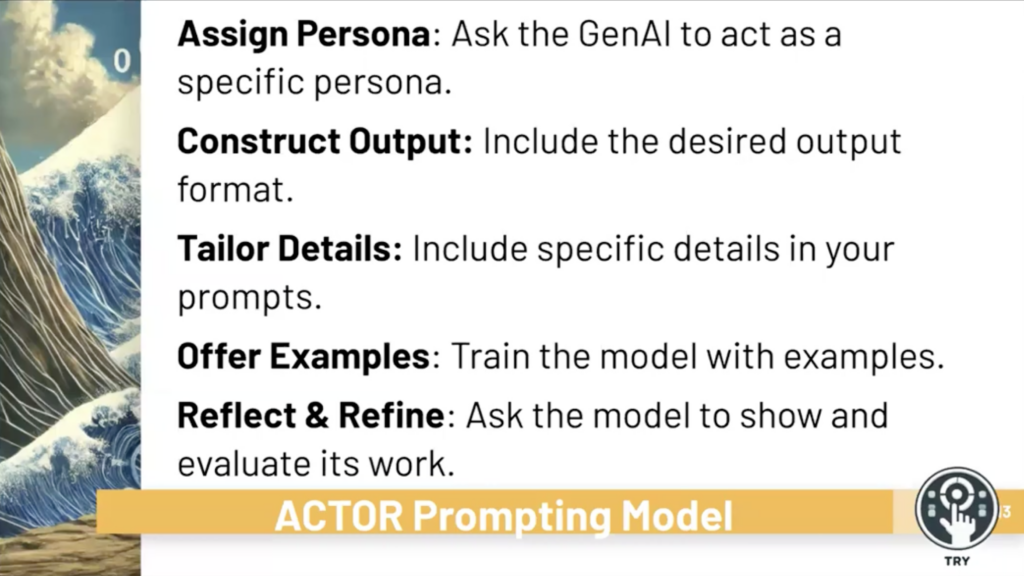
Above: A screenshot from Wright’s presentation on how to typecast AI with the right prompt, complete with an example on how to elaborate on it.
This does come with a slight downside that Wright elaborates on in his presentation. The results that you receive with GenAI are almost entirely determined on the data that they’re trained on- leading to bias and misleading information included in the results. More than ever, this is why it’s important to not blindly use AI and understand the risk that possesses, and develop a new sense of evaluated judgement dedicated to critically thinking about AI models and their respective users.
A perfect place to start is by talking about AI fact-checking models, which are used as a “fight fire with fire” solution in post-secondary when GenAI models were first becoming mainstream.
A better framework is needed
The University of Adelaide found that fact checking models (the most popular being Turnitin,) were accurate only 34% of the time, which then downgraded to 17%. To put it another way, using Turnitin to check if a paper is written by another GenAI model is less like fighting fire with fire and more like pouring gasoline onto an already raging fire. A Texas A&M University professor in 2023 ran all of his students’ papers through a fact checking model, and based on the false results, accused his entire class of plagiarizing. Actions like this create a new sense of fear amongst students who could be (and have been) falsely accused of using GenAI to take shortcuts on their assignments.
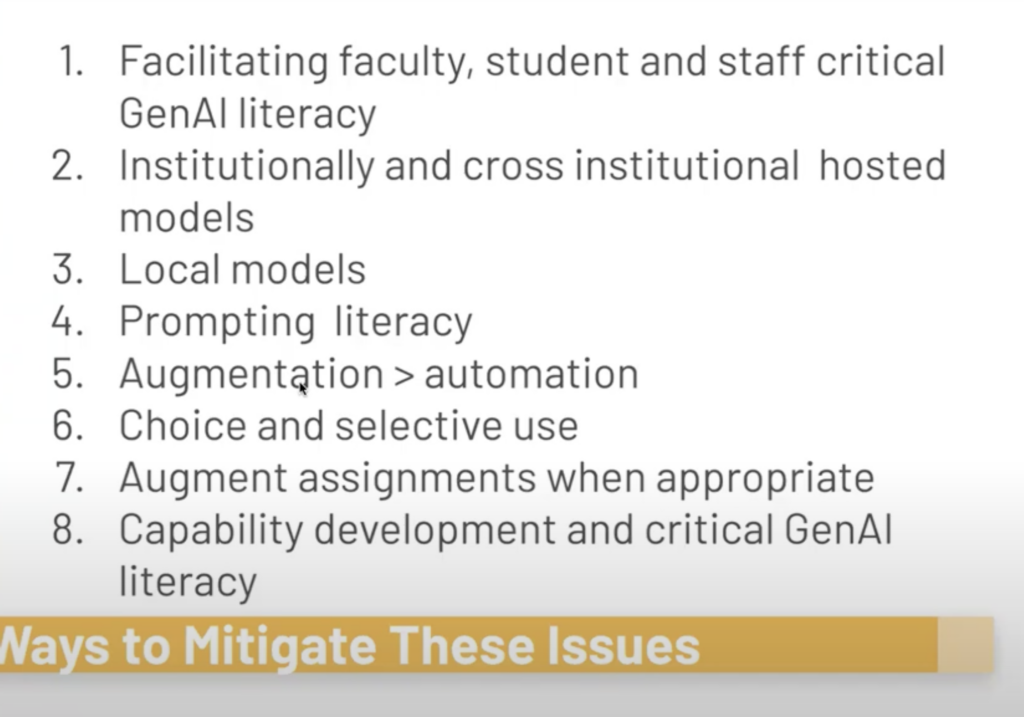
To eliminate some of the skepticism surrounding GenAI, I would strongly recommend universities to develop a set of guidelines for its usage. The guidelines should enable students and faculty to understand how they work and how to use them in a way that enhances, rather than replace their learning. Refinements to the guidelines will take time and practice but with each iteration, they will pay off massively for the speed of students’ learning and staying current to the pace of technological advancement and digital literacy.
Leave a Reply